

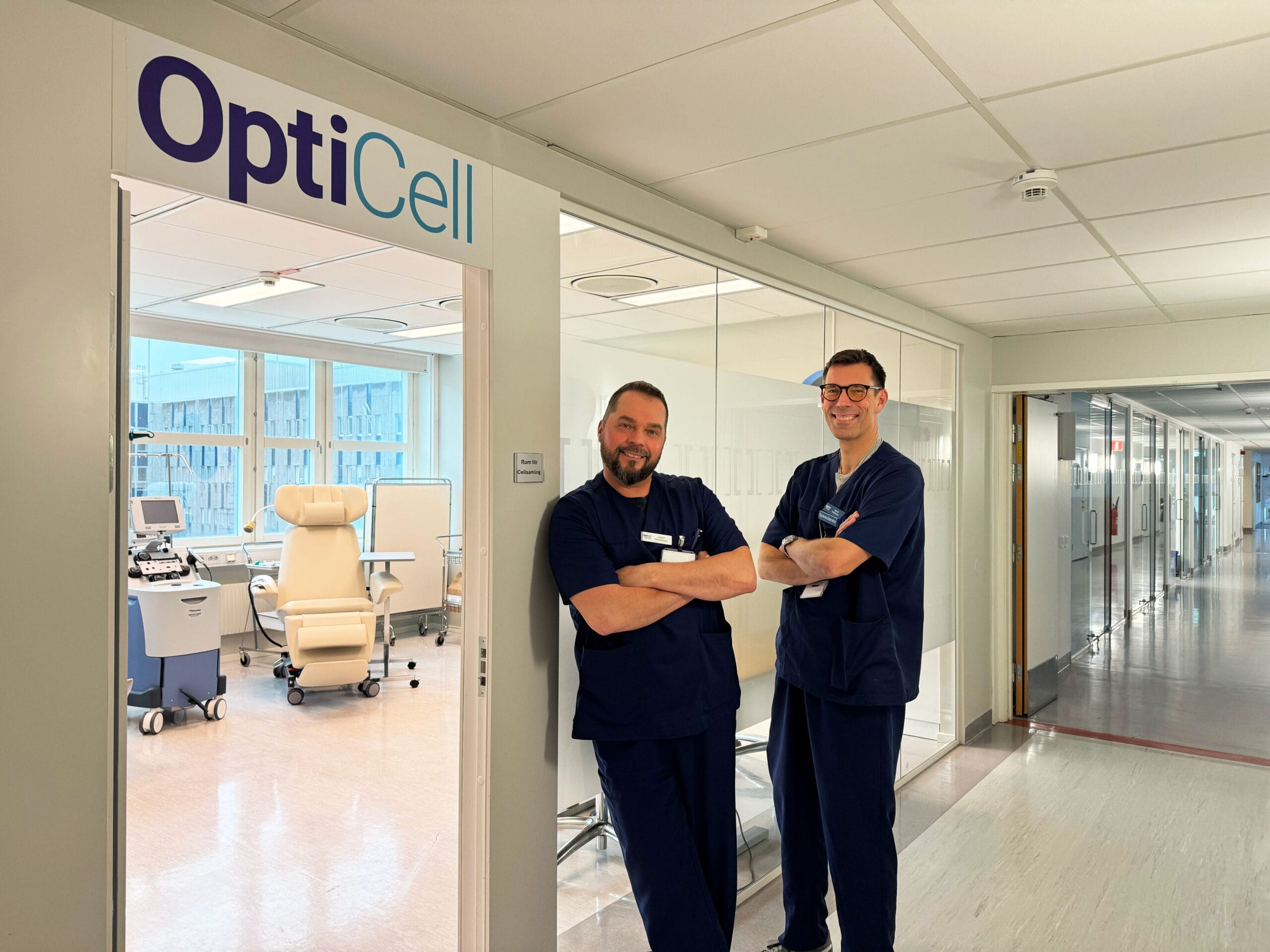
OptiCell Solutions enters a research collaboration with Karolinska Institutet
With the goal of supporting academia, healthcare, and industry in developing the cell and gene therapies of the future, OptiCell Solutions established its operations in Flemingsberg last year. The company has now entered into a research collaboration with Karolinska Institutet, marking a significant step in the desired direction.
When Jarmo Henriksson founded OptiCell Solutions, it was with a clear ambition to address what he describes as a bottleneck in the development of cell and gene therapies: cell collection. Together with colleagues Henrik Fahlander and Ulla Axdorph Nygrell, bringing over 100 years of combined clinical experience, they made a transition from healthcare to continue making a difference for patients. Through the two-year research collaboration with Karolinska Institutet, the team can now deliver high-quality cells to research groups.
A feather in our cap, says Jarmo Henriksson, expressing pride in OptiCell Solutions being given the trust to be able to contribute to scientific progress.
OptiCell Solutions offers cell collection through apheresis technology – a method in which blood is drawn from a donor, target cells are collected, and the blood is then returned. This technique can yield more than 20 times the number of target cells compared to standard blood donation and can serve as a key resource for understanding disease mechanisms and developing new treatments.
For advanced therapies to become a reality, healthy voluntary research participants and preliminary studies are essential. That’s where we come in, by offering precisely that service: collecting high-quality cells that could ultimately help bring these advanced therapies to the patients who need them.
At their home base, Novum Labs in Flemingsberg, they welcome cell donors – just a stone’s throw from Karolinska Institutet and Karolinska University Hospital. The geographical proximity has always been important, both from a strategic standpoint and because it’s since long been their home.
Having daily contact with people of different backgrounds and expertise is invaluable, says Jarmo Henriksson, emphasizing the importance of being part of the local community and ecosystem.
As the new research collaboration is entered, OptiCell Solutions is also in discussions with private partners to further advance the company’s growth. Looking ahead, they aim to become a market leading unit that, in collaboration with other stakeholders, can offer a complete concept and position themselves as a Nordic – or even European – player in cell collection. Yet, their outlook on the future remains firmly guided by the company’s core vision: to make a real difference for patients.
he most important thing here is the patient. We know how extensive the resources required to care for sick people are. If OptiCell Solutions can support future research today and in the years to come, perhaps that will help reduce the burden on hospitals so they can focus on what truly matters – taking care of the sick, says Jarmo Henriksson.
About Cell and Gene Therapy
Cell and gene therapies are two types of Advanced Therapy Medicinal Products (ATMPs). Advanced Therapy Medicinal Products (ATMP), are based on cells, tissues, or genes. They are categorized into somatic cell therapies, gene therapies, tissue-engineered products, and combination products containing advanced therapy medicinal products. This means that diseases can be treated in entirely new ways. Treatment with ATMP can involve a single treatment with the expectation of a lasting effect, a form of repair. They can also offer significant opportunities for long-term survival for certain cancer patients where other treatment options have been exhausted. Additionally, it can provide treatment options for patients with hereditary diseases where effective treatment alternatives are currently lacking.
Learn more about ATMPs at ATMP Flemingsberg

