

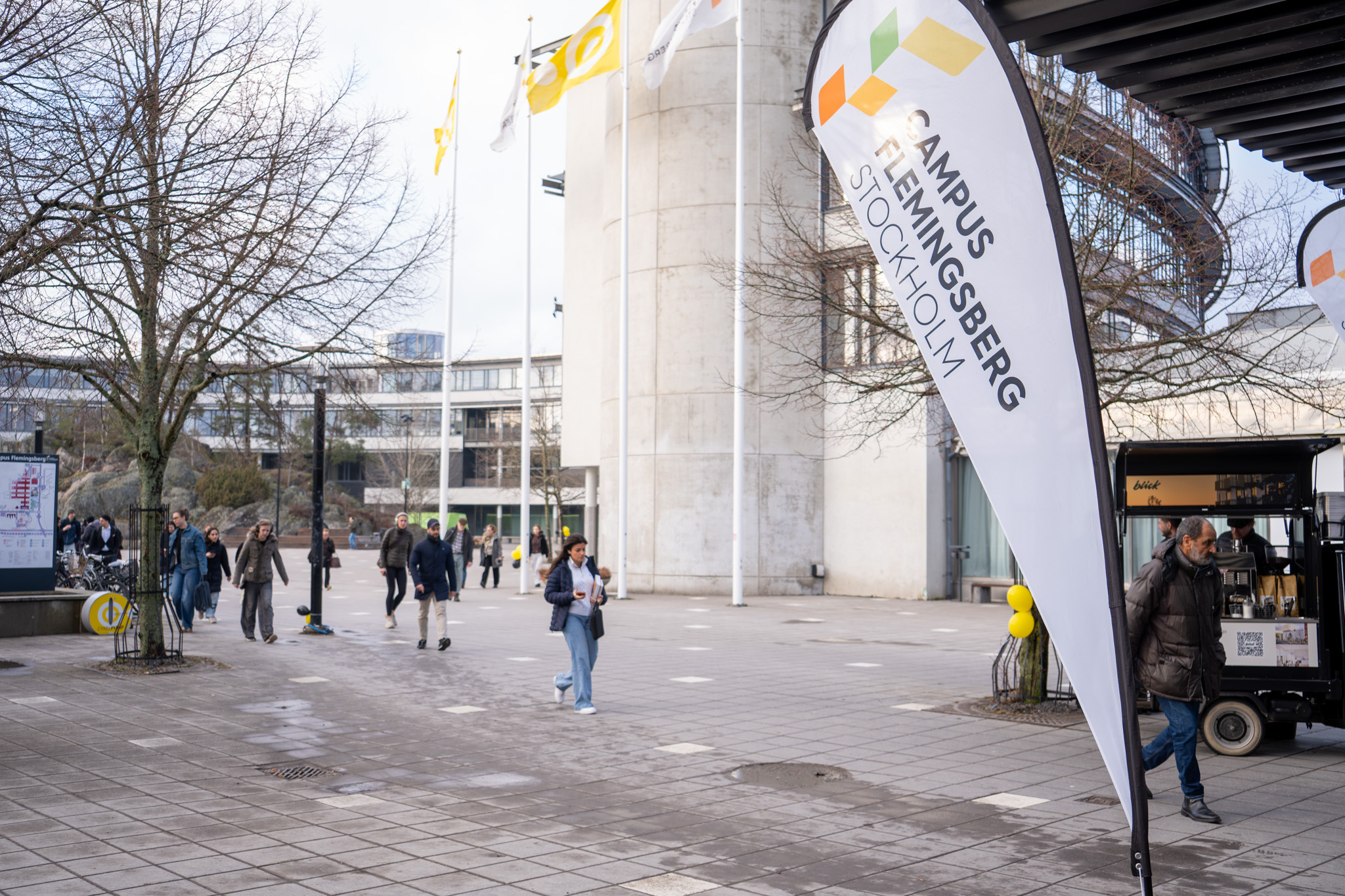
Campus Flemingsberg continues to grow – more students and strong collaboration in focus
Campus Flemingsberg remains one of Sweden’s most dynamic knowledge environments. Over the past year, the number of students has increased from 24,000 to approximately 27,000. The trend is clear: the campus’s broad academic profile continues to attract a growing number of students.
At Campus Flemingsberg, students can pursue studies ranging from medical engineering and economics to performing arts and art history – and the campus is also home to police education. This breadth is one of Campus Flemingsberg’s greatest strengths. Regardless of the societal challenge, there are people here working together to develop new solutions.
A defining feature of Campus Flemingsberg is the close collaboration between the various higher education institutions located in the area. Through a joint campus group, the institutions coordinate initiatives such as Open House events and Campus Day, with the aim of showcasing both the wide range of programmes offered and the campus’s unique environment.
– We hope that the joint Open House organised by the campus institutions helps spark interest in the many educational programmes available at Campus Flemingsberg. During Open House, prospective students have the opportunity to experience the campus environment, meet representatives from different programmes, and get a sense of student life. Interest in this year’s Open House on 25 March was very strong – we met many curious and engaged future students, says Helene Komlos Grill, Head of Communications at Red Cross University.
Campus Flemingsberg is an integral part of the emerging city of Flemingsberg – a regional urban core developing into an urban hub where knowledge and creativity meet. Here, conditions extend beyond education alone: a vibrant environment where students can stay on after lectures, live, work and take part in a lively campus and city life.
– Campus Flemingsberg demonstrates how breadth and collaboration can become a strength. When education, research and societal actors work side by side, we are developing a university city where knowledge is transformed into solutions – for people, for regional development, and for future skills supply, says Pernilla Boström, COO at Flemingsberg Science.
Södertörn University Invests in Social Innovation for Youth in Flemingsberg
Södertörn University has announced that they have been granted funding from the Swedish ESF Council to establish a competence center for social innovation. Flemingsberg continues its development as an innovation hub as researchers, students, and various stakeholders engage in efforts to combat social and economic vulnerability among young people in Södertörn.
Cluster Engine Flemingsberg – ERDF Project for Growth in Life Science
Flemingsberg is taking a significant step towards establishing itself as a central player in Life Science with the launch of the “Cluster Engine Life Science Flemingsberg” project. The project has been granted funding from the European Regional Development Fund (ERDF) and aims to strengthen the growth and establishment of small and medium-sized enterprises (SMEs) within the life science sector in the Stockholm region. The total project budget is €10.8 million for the years 2025–2027.
BioLamina Establishes Operations in Flemingsberg – A Key Player in ATMP Development
As the world’s first and only producer of laminins, the biotechnology company BioLamina has expanded its operations and chosen to establish part of its business in Flemingsberg. Using laminins, a protein that creates an optimal environment for cells to expand and/or differentiate, they are a key player in the development of ATMPs (Advanced Therapy Medicinal Products) in Sweden and globally.
Sally Sow and Turn UP: Winners of the Flemingsberg Science Award IDEA 2024
The music world can be a challenging place, both for organizers trying to reach their audience and for music lovers searching for events that suit their taste. Sally Sow, the winner of the Flemingsberg Science Award IDEA 2024, has developed Turn Up, a platform that simplifies organizing, discovering, and participating in local music events. With a focus on inclusion and accessibility, she aims to create a music scene where everyone feels welcome.

